
Digital biomarkers
Methods for representing continuous physiological and behavioral data as complex functional and distributional objects.
Biostatistics · AI · Digital health
A new scientific framework for understanding health, continuously.
Bringing together biostatistics, artificial intelligence, digital health, and clinical decision-making.
No matter how high the mountain, there is always a path to the summit.
Welcome to the website of Marcos Matabuena’s research group at Mohamed bin Zayed University of Artificial Intelligence
Digital health has the potential to identify disease risks years—or even decades—before clinical symptoms emerge. Our mission is to develop the mathematical, statistical, and artificial intelligence methods needed to make this transformation possible, using continuous-time and high-frequency information collected through modern medical devices.
Ultimately, we aim to move beyond the treatment of disease toward the continuous, real-time optimization of individual and population health. To support this transition, we are developing a scientific framework that we call Digital Biostatistics.
We define digital biostatistics as the branch of biostatistics concerned with the design, analysis, statistical inference, and clinical translation of continuously collected, high-frequency, longitudinal, and multimodal health data generated by digital technologies, with the ultimate goal of supporting clinical and healthcare decision-making by integrating biostatistics with operations research.
Digital devices and longitudinal measurements.
Rigorous methods and uncertainty quantification.
Personalized care and population health.
This vision has been shaped by formative experiences, mentorship, and collaborations at Harvard, Johns Hopkins, and the University of North Carolina at Chapel Hill, particularly in digital phenotyping, functional data analysis, personalized medicine, and longitudinal health data.
Our projects seek to establish the rigorous methodological foundations of digital biostatistics and demonstrate their practical value in biomedical research, clinical practice, and population health.
Over the next 10 years, our ultimate research goal is to develop a low-cost healthcare operations framework that improves health outcomes at both the individual and population levels by integrating biostatistics, digital health, and operations research.
Artificial intelligence in medicine is still at an early stage, and only a small fraction of its potential has been demonstrated in real-world clinical practice. From a statistical-learning perspective, many current applications continue to address relatively simple and well-defined prediction tasks. The next generation of medical AI, however, will need to confront substantially more complex and clinically consequential questions: What is the optimal diet for a particular person? How should treatment and prevention strategies evolve over time? How can heterogeneous clinical, biological, behavioral, and environmental information be integrated into a unified decision-making framework?
Digital biostatistics can provide the scientific foundation needed to address these challenges. Powerful AI systems may perform well on specific prediction tasks, but prediction alone is not sufficient in real-world clinical and healthcare settings. Their outputs must be supported by rigorous statistical inference, uncertainty quantification, careful experimental and observational study design, and methods capable of analyzing continuous, longitudinal, high-frequency, and multimodal health data. These components must ultimately be integrated with operations research to translate predictions into reliable clinical decisions and more effective healthcare operations.
Over the next 10 to 15 years, advances in AI, together with our rapidly expanding capacity to measure biological systems almost continuously and at population scale, could transform biomedical research. These developments may enable a new generation of scientific discoveries, accelerate the development of personalized therapies, and deepen our understanding of complex diseases.
We expect increasingly detailed longitudinal metabolic and physiological phenotypes to emerge from wearable devices, medical sensors, medical imaging, genomics, single-cell technologies, microbiome data, electronic health records, and other digital technologies. The central challenge will not simply be to collect or process more data. It will be to develop scientifically valid frameworks that can identify biologically meaningful patterns, distinguish association from causation, quantify uncertainty, and support personalized decisions that adapt to each individual over time.
In this context, digital biostatistics is not a secondary component of medical AI. It provides the scientific and mathematical foundations needed to transform increasingly powerful AI systems into rigorous, interpretable, and clinically useful tools.
Our research
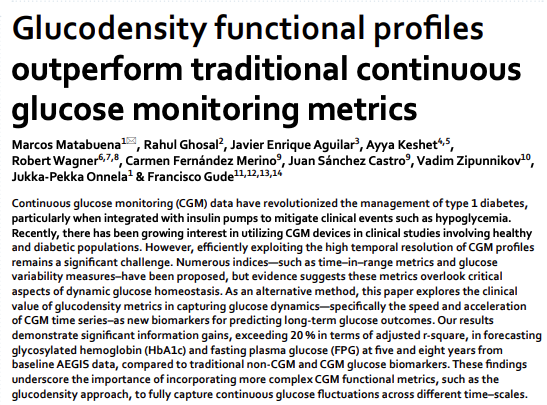
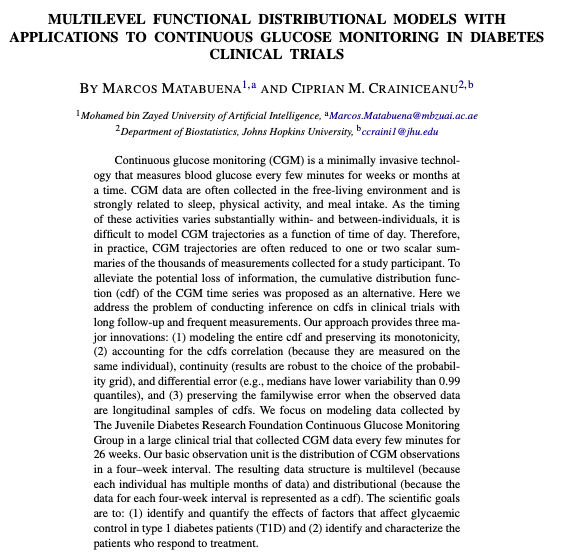
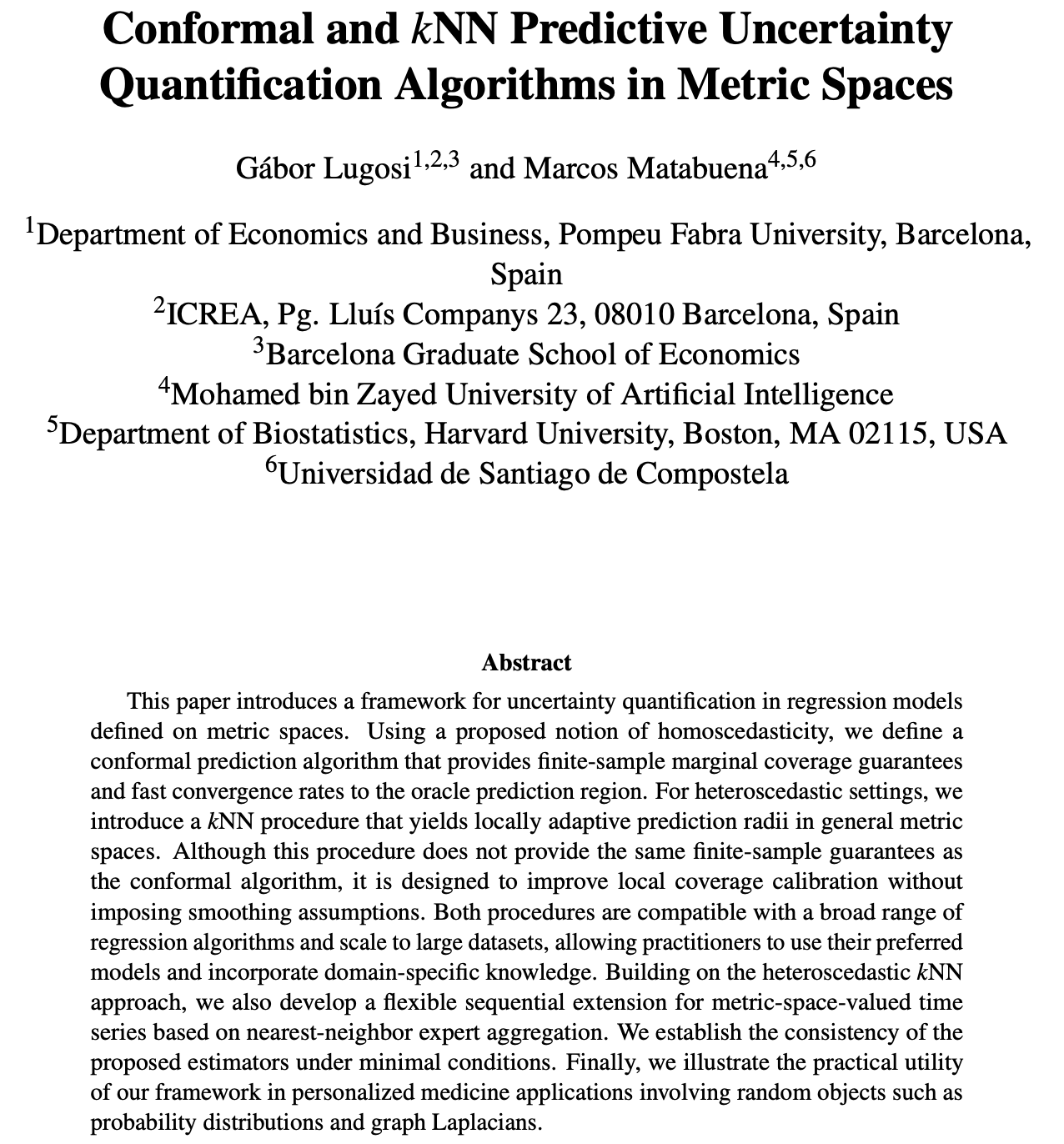
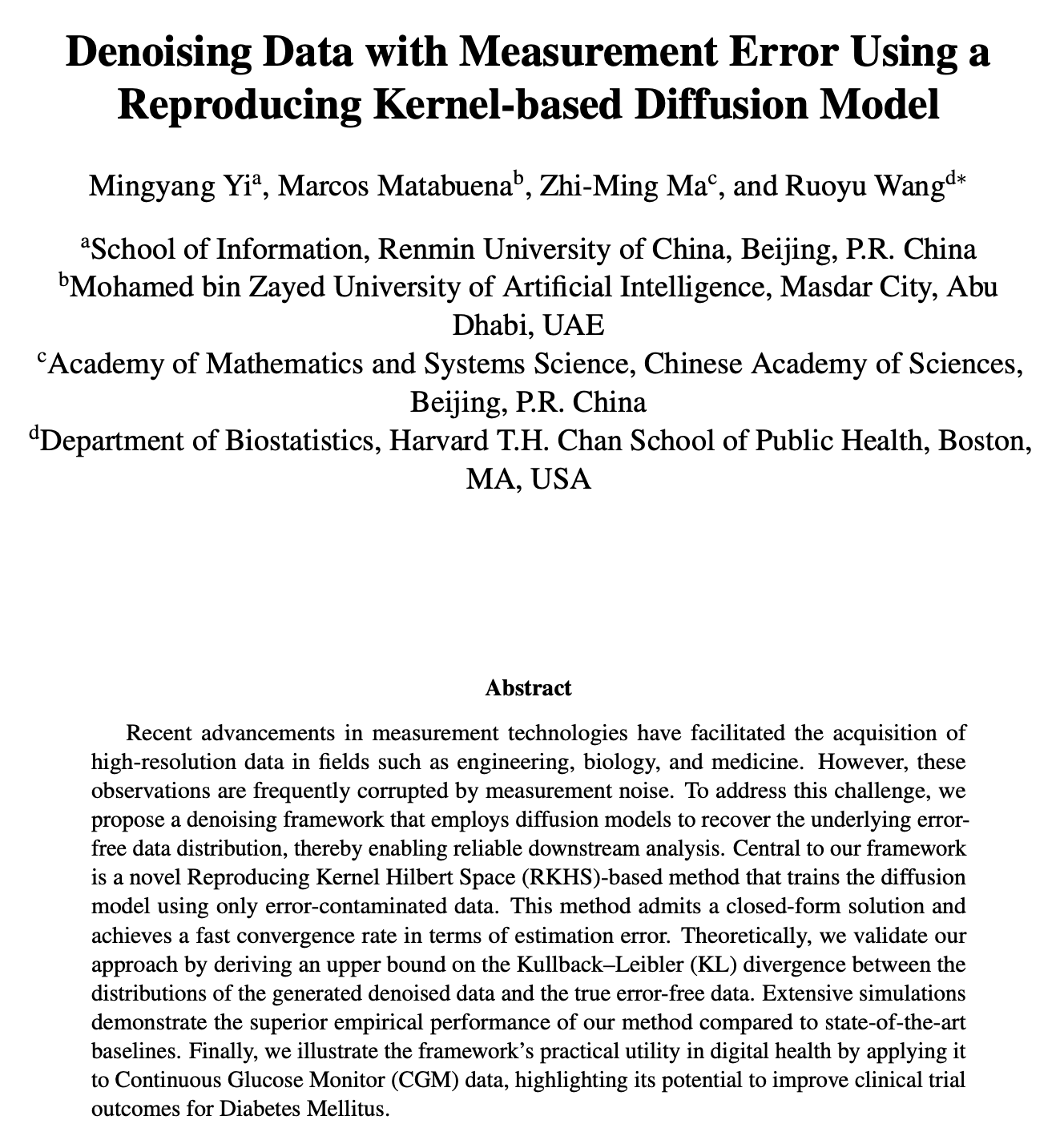
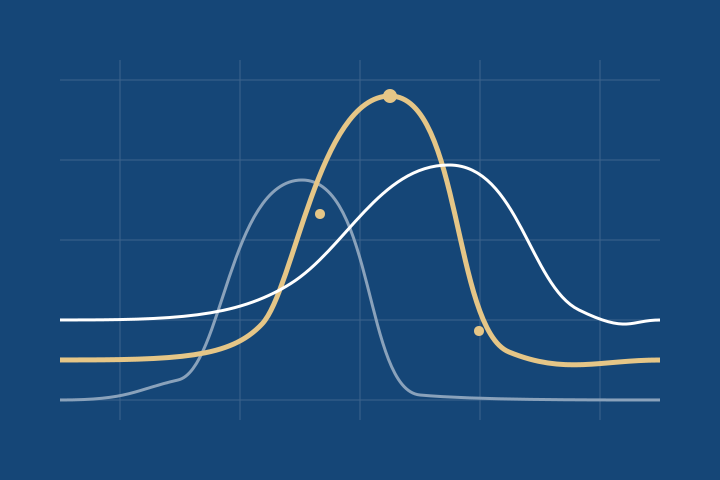
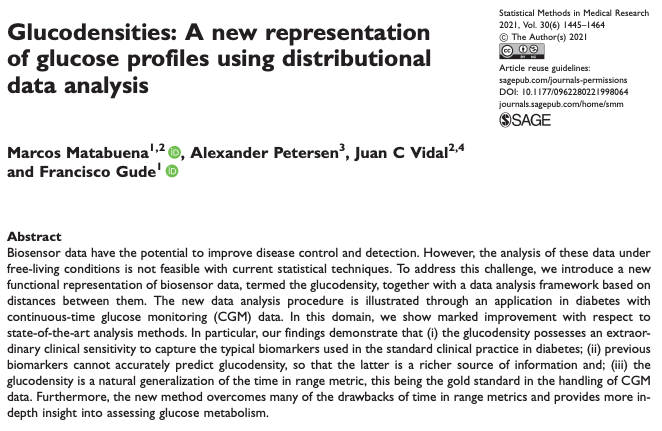
We pioneer the development of non-Euclidean statistical methods for defining a new generation of digital biomarkers. Our work introduced the concept of glucodensity, a comprehensive distributional biomarker designed to represent digital health data collected under free-living conditions. We also develop modern machine-learning and statistical AI methods, together with novel approaches to uncertainty quantification for complex, high-dimensional data. These tools enable us to make fuller use of the rich, dense, and longitudinal information generated by digital health technologies.
Methods for representing continuous physiological and behavioral data as complex functional and distributional objects.
Machine learning, random-effects models, generative methods, and uncertainty quantification for longitudinal and non-Euclidean data.
Integration of prediction, causal reasoning, uncertainty, and operations research to support individualized and population-level decisions.
Our projects
Our current projects focus on developing a new generation of statistical AI methods capable of transforming the vast amounts of information collected by digital devices into clinically meaningful knowledge. We aim to demonstrate, through real-world medical problems, how these methods can produce tangible advances in clinical research and practice.
Our team
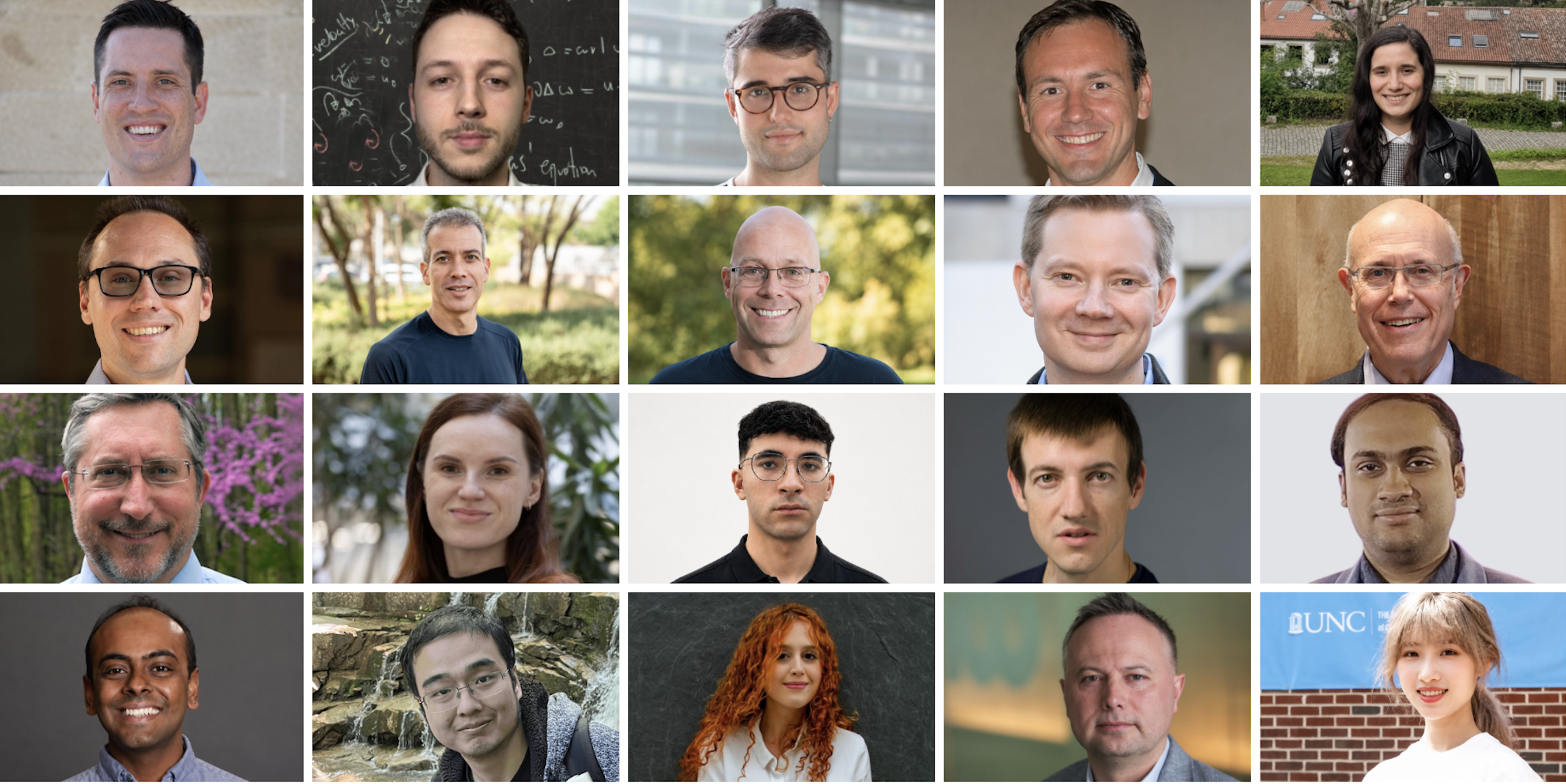
An interdisciplinary team working at the intersection of statistics, artificial intelligence, and biomedical research, with a global network of leading collaborators.
We are building an interdisciplinary research program at the intersection of biostatistics, epidemiology, artificial intelligence, digital health, and medicine. We welcome ambitious students and collaborators interested in developing rigorous methods around consequential biomedical questions.

We believe that important scientific problems require rigor, imagination, perseverance, and generous collaboration.
Just as the laboratory opened new frontiers in biomedicine, digital biostatistics may become one of the defining scientific instruments of the data-driven era: a new telescope for observing human health continuously and revealing biological patterns that were previously invisible.