
Research
The ongoing future
Imagine a person experiencing an acute coronary syndrome alone at home, wearing a device that continuously monitors vital signs. As the device detects critical changes—such as an abnormal electrocardiogram or a drop in oxygen levels—it automatically triggers an emergency response. Within seconds, the system locates and dispatches the nearest available ambulance, adapting in real-time to factors like traffic conditions and hospital capacity.
While en route, the device continuously transmits vital patient data, enabling dynamic adjustments to medical and logistical decisions. If the patient’s condition worsens, the hospital is alerted to prepare a critical care unit. Upon arrival, predictive models guide decision-making, ensuring the best possible outcome while maximising healthcare resource efficiency.

Our mission and vision
Our long-term goal is to build a healthcare decision-making framework that supports better clinical and public health decisions at both the individual and population levels by combining biostatistics, digital health technologies, and operations research.
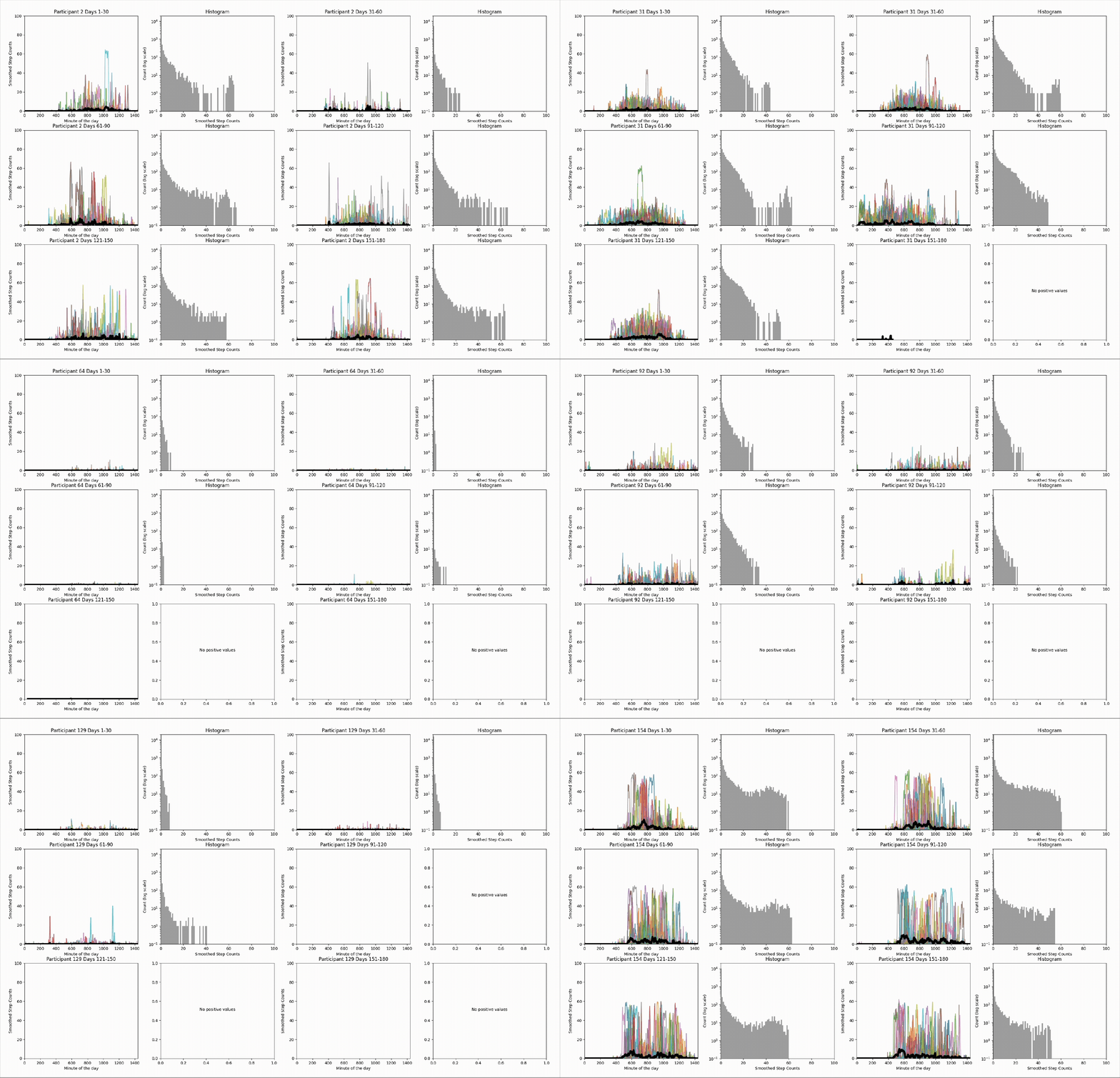
We are currently developing statistical and artificial intelligence methods for complex clinical problems involving continuous, high-frequency, and real-time health data. We want these methods not only to answer existing medical questions, but also to help identify the questions that matter most. What diet is best for a particular person? How much physical activity does someone need to support healthy aging and longevity? How should these recommendations change according to an individual’s clinical profile, biology, environment, and lifestyle?
To address these questions, our research brings together modern statistical AI methods for causal inference, survival analysis, uncertainty quantification, and random-effects generative modeling to advance statistical learning for non-Euclidean random objects. Careful study design and computational scalability are essential to this vision. Our goal is to develop methods that are mathematically rigorous yet computationally efficient at population scale, targeting biomedical resources such as the UK Biobank, the All of Us Research Program, the Human Phenotype Project, and NHANES.

Although many methods published in top methodological journals are mathematically rigorous and technically sound, they are not always designed with the complexities and hyphotesis of real-world clinical data in mind. Our research is therefore grounded in concrete biomedical questions and practical challenges. We develop methods that reflect the structure of the data, the realities of clinical practice, and the critical decisions facing patients, clinicians, and healthcare systems to progress the field.
Seven pillars of our research program in digital health
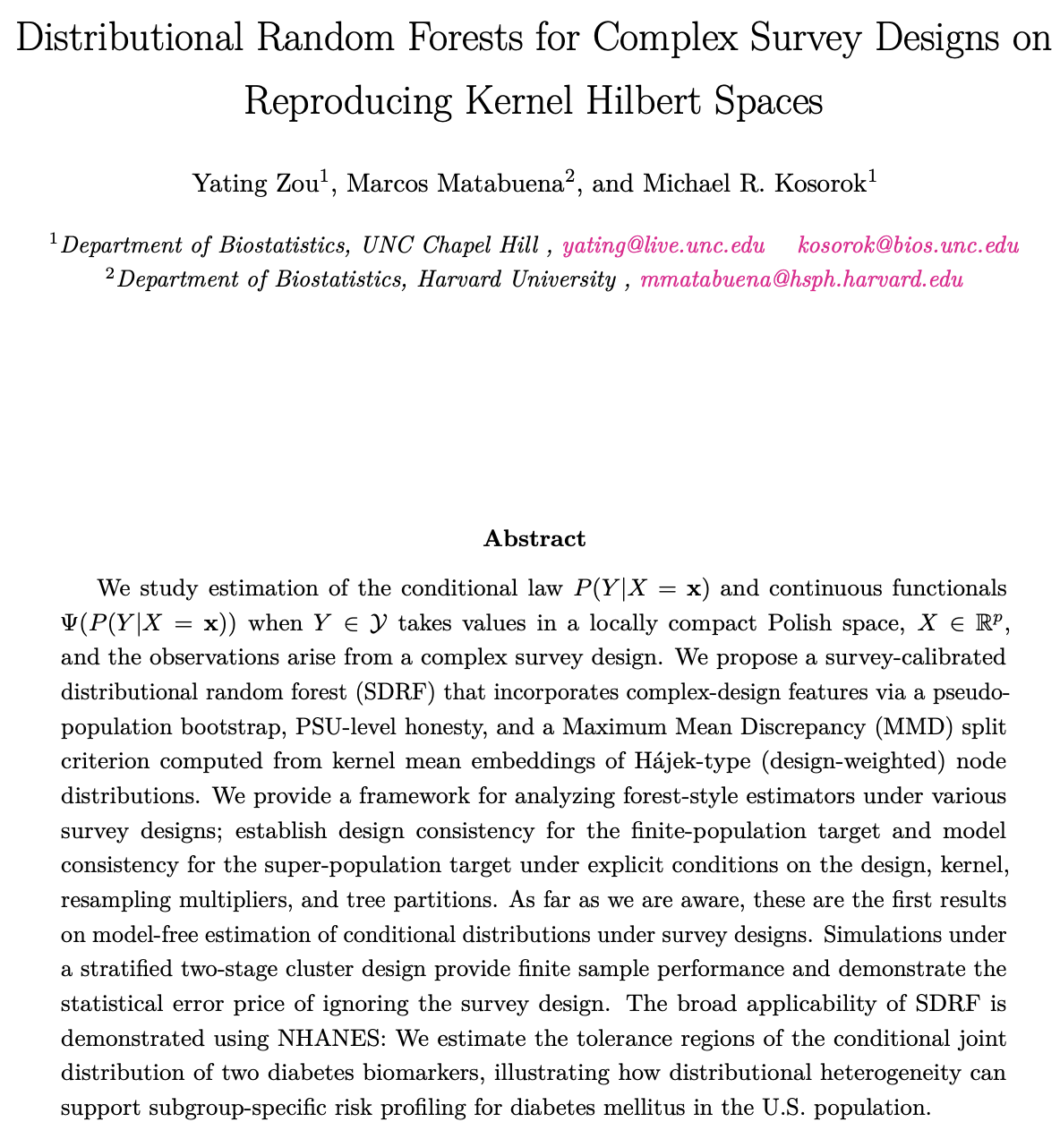
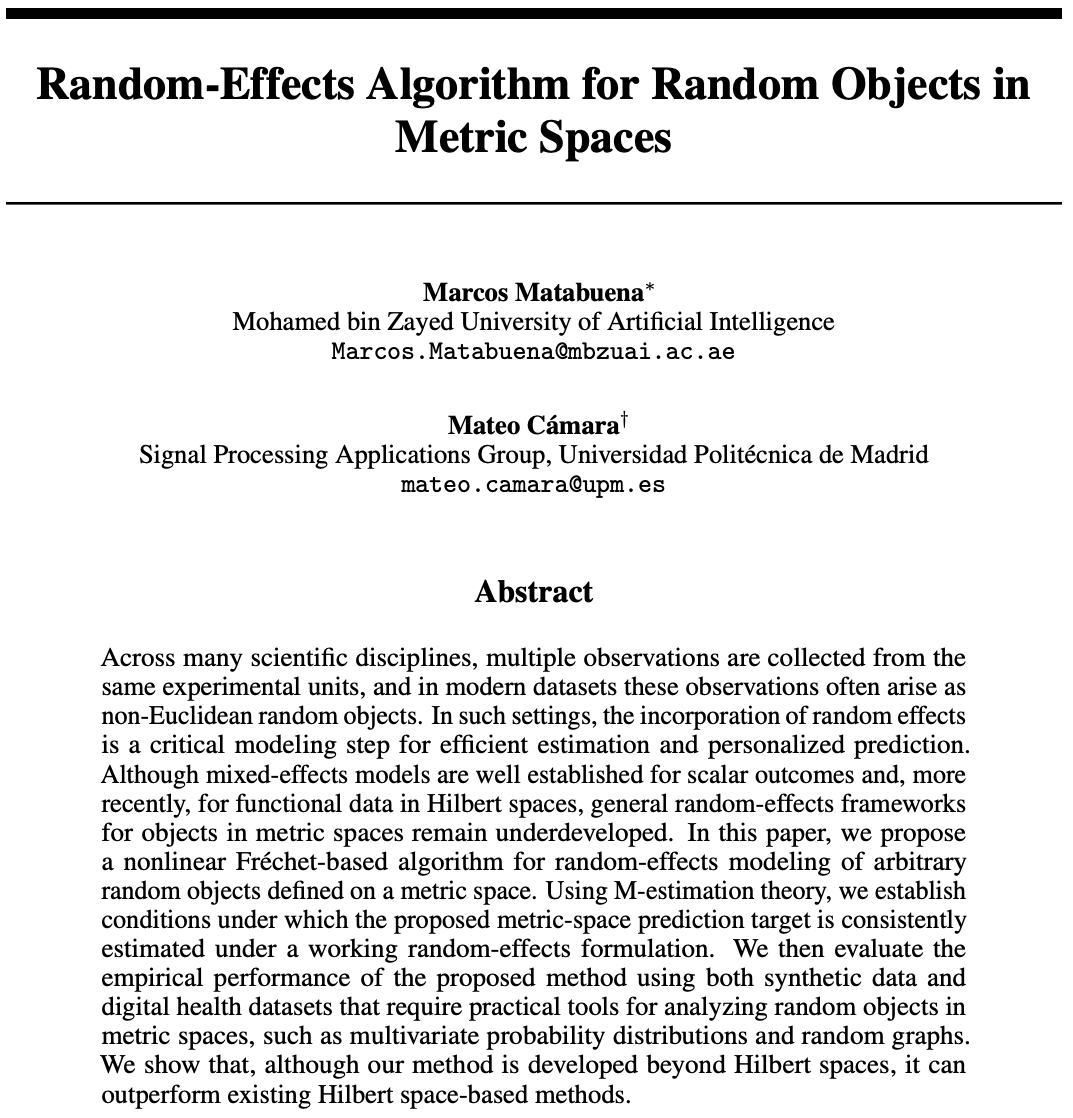
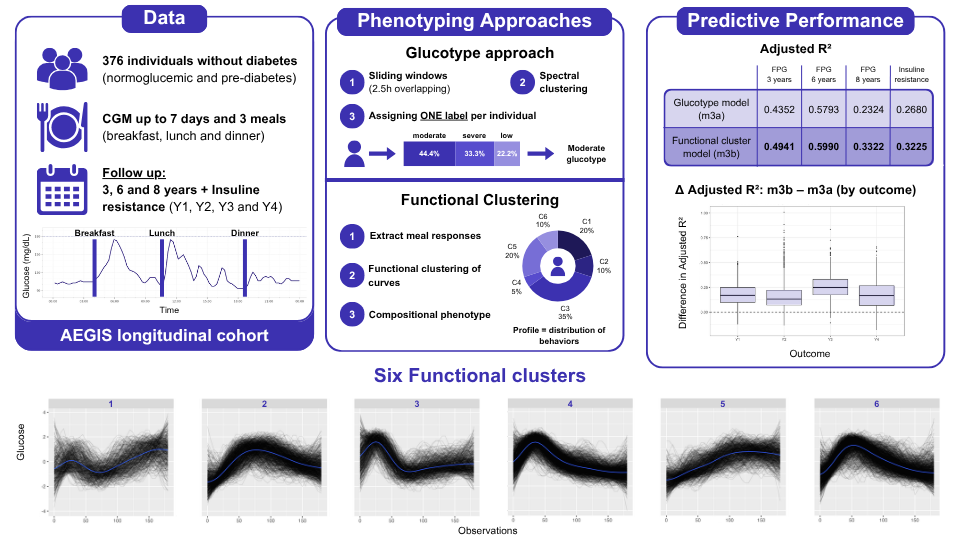
Our seven papers represent a substantial methodological and conceptual advance for the field of digital health.
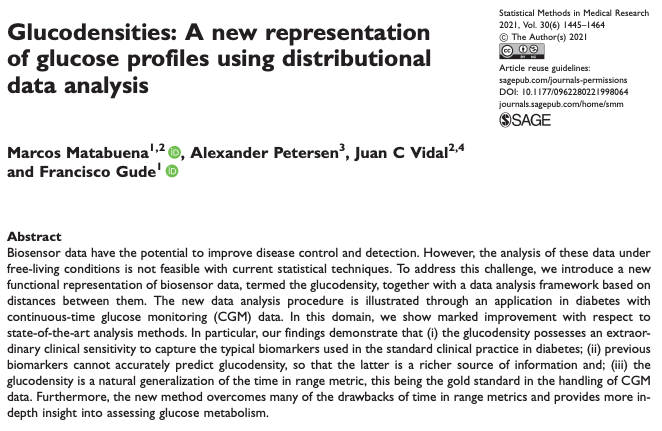
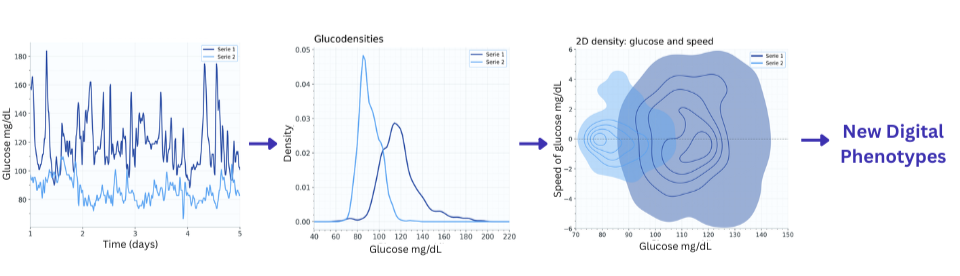
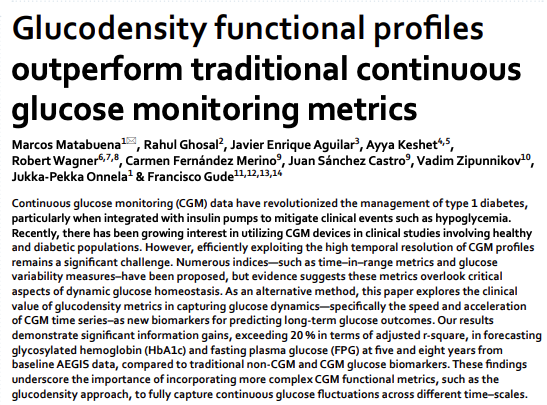
The introduction of the notion of glucodensity represents a first step toward the creation of more complex digital phenotypes through functional and distributional data analysis. This framework opens new directions for biological discovery and allows us to use the continuous information generated by new medical devices more efficiently, instead of reducing these data to a reduced number of scalar measures.
The introduction of multivariate glucodensity represents a further conceptual step in the analysis of human physiology. Clinical data are no longer analyzed only as individual numbers, but as complex objects that are closer to medical images. We can now integrate the dynamics of the underlying physiological processes within a unified distributional glucodensity framework.
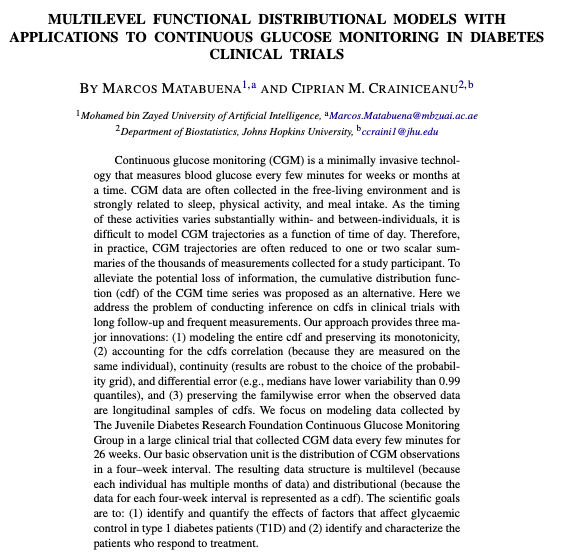
The joint work with Ciprian Crainiceanu on random-effects models for glucodensity data extends these ideas to longitudinal studies conducted over weeks, months, or years. This work creates a new framework for using digital information in clinical trials, with the possibility of increasing statistical power and discovering new and more relevant longitudinal biomarkers.
With Mateo Cámara, we propose the first framework for random-effects modeling in general metric spaces, providing a unified approach for analyzing different types of statistical objects in clinical studies. Most of the information collected in digital health is nearly continuous over time, is measured at multiple time scales, and naturally exhibits a multilevel structure. Our framework provides, for the first time, a general analytical way to model these complex sources of variation within a broader mathematical generality.
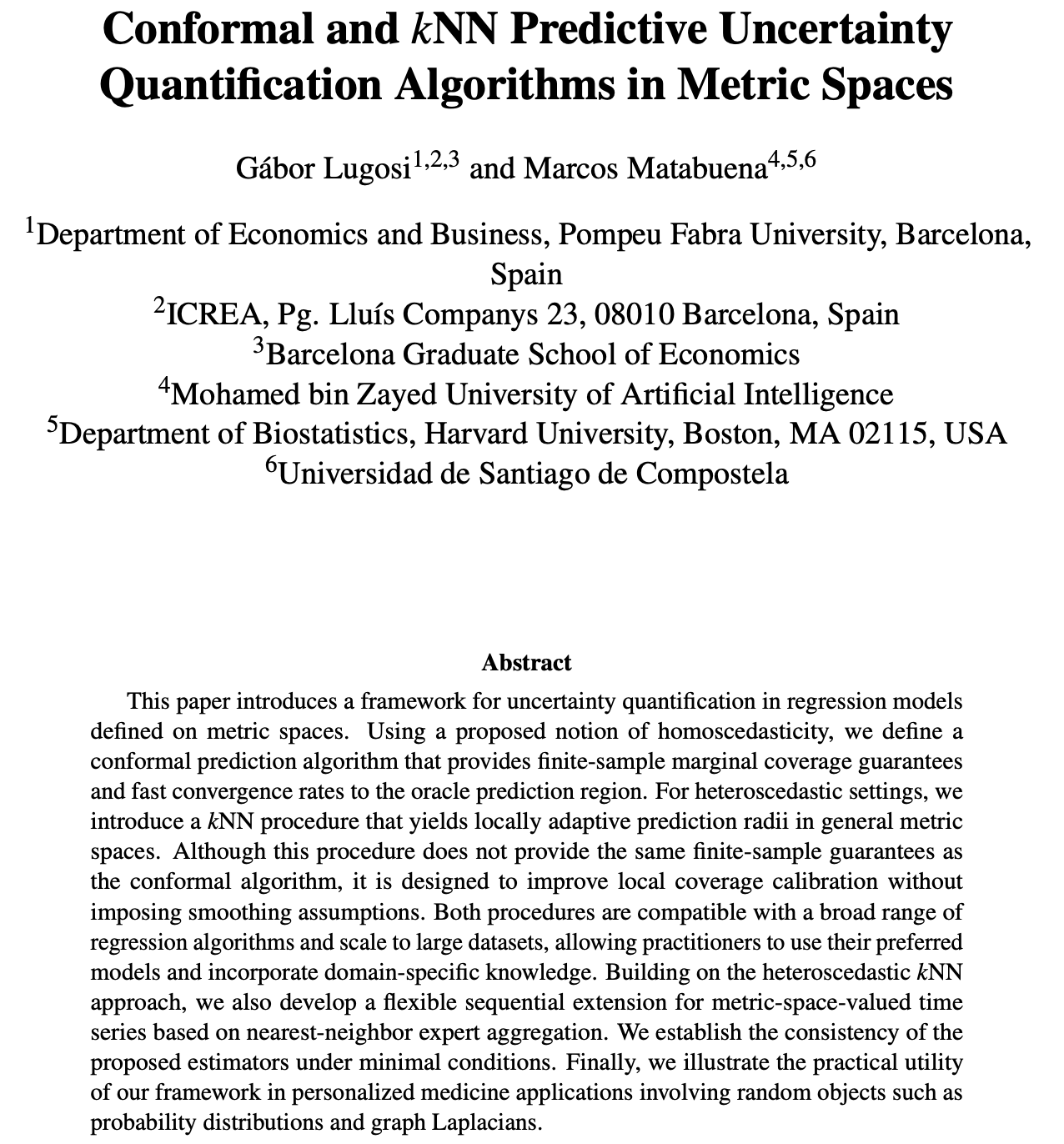
The framework for uncertainty quantification in metric spaces, developed together with Gábor Lugosi, is methodologically important because it provides a formal method for calibrating and evaluating conditional coverage without restrictive smoothness conditions. At the same time, it opens a more general framework for uncertainty quantification for the biomarkers of the future, which will increasingly be represented as distributions, functions, images, networks, or other complex non-Euclidean random objects.
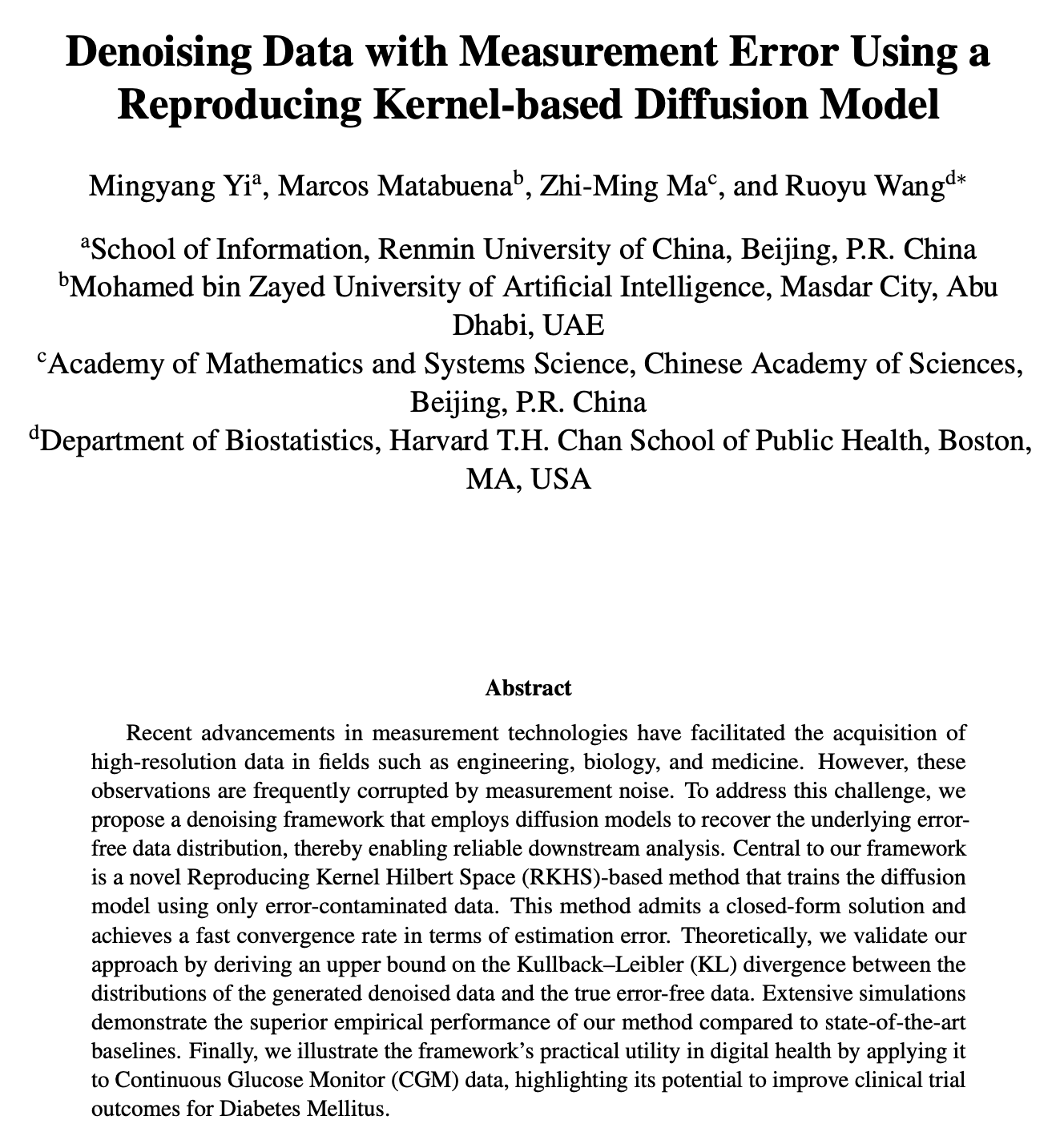
The work with my Chinese colleagues, Mingyang Yi, Zhiming Ma, and Ruoyu Wang, on diffusion models and measurement error opens the possibility of incorporating measurement uncertainty into biomedical decision-making. The main idea is to use general generative artificial intelligence methods within classical measurement error statistical pipelines, allowing the error generated by sensors, clinical measurements, and other biomedical technologies to be incorporated directly into the analysis.
Finally, the success of the new data-driven era will also depend on the development of new experimental and sampling designs. In joint work with Yating Zou and Michael Kosorok, we propose a new random forest methodology for complex survey data. The method has relevant inferential implications because the bootstrap procedure is applied at the node level. This opens new theoretical opportunities about how we can improve the performance of machine learning methods for complex sampling designs and, at the same time, provides a principled way to use large health datasets while preserving valid inference for the target population.
Together, these works define the main pillars of our research program: the new representation of digital health data, longitudinal and multilevel modeling, uncertainty quantification, generative AI-driven measurement-error correction, and statistically valid inference from complex biomedical studies.
Research output from previous years
2026

Denoising Data with Measurement Error Using a Reproducing Kernel-based Diffusion Model
arXiv
·
14 Jul 2026
·
arxiv:2501.00212
EpiBinder: a multimodal framework for cell-type-specific prediction and interpretation of transcription factor binding
openRxiv
·
08 Jul 2026
·
10.64898/2026.07.06.736502
Pre-activity glycemic prediction prioritizes post-meal movement
openRxiv
·
24 Jun 2026
·
doi:10.64898/2026.06.22.26356272
Conformal and kNN Predictive Uncertainty Quantification Algorithms in Metric Spaces
arXiv
·
23 Jun 2026
·
arxiv:2507.15741
A Deep Learning-Based Predictive Algorithm for Metabolic Syndrome Detection in the U.S. Population
openRxiv
·
02 Jun 2026
·
doi:10.64898/2026.05.24.26354007
Capturing the Curve: Functional Data Analysis for Validated Digital Outcome Measures
arXiv
·
28 May 2026
·
arxiv:2605.28344
Gaussian mixture models in Hilbert spaces via kernel methods
arXiv
·
08 May 2026
·
arxiv:2605.05996
Screening for diabetes mellitus in the US population using neural network-based modeling and complex survey designs
Statistical Methods in Medical Research
·
07 May 2026
·
doi:10.1177/09622802261442893
Random-Effects Algorithm for Random Objects in Metric Spaces
arXiv
·
05 May 2026
·
arxiv:2605.02693
Continuous-Time Learning of Probability Distributions: A Case Study in a Digital Trial of Young Children with Type 1 Diabetes
arXiv
·
26 Mar 2026
·
arxiv:2603.24427
Multilevel functional distributional models with applications to continuous glucose monitoring in diabetes clinical trials
The Annals of Applied Statistics
·
01 Mar 2026
·
doi:10.1214/26-AOAS2139
Glucodensity-Based Models Outperform Time in Range and Glycemia Risk Index in Prediction Models
Journal of Diabetes Science and Technology
·
23 Feb 2026
·
doi:10.1177/19322968261421954
Survival on Image Regression With Application to Partially Functional Distributional Representation of Physical Activity
Statistical Analysis and Data Mining: An ASA Data Science Journal
·
01 Feb 2026
·
doi:10.1002/sam.70068
Exploratory analysis of smartphone-based step counts as a digital biomarker for survival in ALS patients
Frontiers in Digital Health
·
29 Jan 2026
·
doi:10.3389/fdgth.2025.1705368
Beyond scalar metrics: functional data analysis of postprandial continuous glucose monitoring in the AEGIS study
BMC Medical Research Methodology
·
24 Jan 2026
·
doi:10.1186/s12874-025-02748-2
Distributional Random Forests for Complex Survey Designs on Reproducing Kernel Hilbert Spaces
arXiv
·
07 Jan 2026
·
arxiv:2512.08179
Daily Physical Activity Patterns Enhance Mortality Prediction in NHANES 2011-2014: A Comparative Study Across Classical, Machine Learning, and Deep Learning Models Using Accelerometer Data
Journal for the Measurement of Physical Behaviour
·
01 Jan 2026
·
doi:10.1123/jmpb.2025-0052
From Physical Activity to Spirometry (as a Curve): A Combined Model for Mortality Prediction
Unpublished
·
01 Jan 2026
·
doi:10.13140/RG.2.2.35806.60486
2025
Continuous Glucose Monitoring as an alternative for Cystic Fibrosis Related diabetes screening and diagnosis
Diabetes Research and Clinical Practice
·
01 Nov 2025
·
doi:10.1016/j.diabres.2025.112952
Unequal strides to longevity. The extra mile to health equity
Annals of Epidemiology
·
01 Nov 2025
·
doi:10.1016/j.annepidem.2025.10.009
kNN Algorithm for Conditional Mean and Variance Estimation with Automated Uncertainty Quantification and Variable Selection
arXiv
·
28 Oct 2025
·
arxiv:2402.01635
Variable Selection for Fixed and Random Effects in Multilevel Functional Mixed Effects Models
arXiv
·
24 Oct 2025
·
arxiv:2505.05416
ROC Analysis with Covariate Adjustment Using Neural Network Models: Evaluating the Role of Age in the Physical Activity-Mortality Association
arXiv
·
20 Oct 2025
·
arxiv:2510.14494
Glucodensity functional profiles outperform traditional continuous glucose monitoring metrics
Scientific Reports
·
29 Sep 2025
·
doi:10.1038/s41598-025-18119-2
Age, Sex, BMI, Meal Timing, and Glycemic Response to Meal Glycemic Load
JAMA Network Open
·
23 Sep 2025
·
doi:10.1001/jamanetworkopen.2025.33193
Continuous Temporal Learning of Probability Distributions via Neural ODEs with Applications in Continuous Glucose Monitoring Data
arXiv
·
18 Sep 2025
·
arxiv:2505.08698
Distributional Data Analysis Uncovers Hundreds of Novel and Heritable Phenomic Features from Temporal Cotton and Maize Drone Imagery
openRxiv
·
07 Sep 2025
·
doi:10.1101/2025.09.05.674557
Functional time transformation model with applications to digital health
Computational Statistics & Data Analysis
·
01 Jul 2025
·
doi:10.1016/j.csda.2025.108131
Model-Free Kernel Conformal Depth Measures Algorithm for Uncertainty Quantification in Regression Models in Separable Hilbert Spaces
arXiv
·
11 Jun 2025
·
arxiv:2506.08325
Conformal prediction for uncertainty quantification in dynamic biological systems
PLOS Computational Biology
·
12 May 2025
·
doi:10.1371/journal.pcbi.1013098
A Telehealth Program Using Continuous Glucose Monitoring and a Connected Insulin Pen Cap in Nursing Homes for Older Adults with Insulin-Treated Diabetes: The Trescasas Study
Diabetes Technology & Therapeutics
·
01 May 2025
·
doi:10.1089/dia.2024.0356
Uncertainty quantification for intervals
arXiv
·
01 Apr 2025
·
arxiv:2408.16381
Deep Learning Framework with Uncertainty Quantification for Survey Data: Assessing and Predicting Diabetes Mellitus Risk in the American Population
arXiv
·
27 Mar 2025
·
arXiv:2403.19752
Optimal Cut-Point Estimation for Functional Digital Biomarkers: Application to Diabetes Risk Stratification via Continuous Glucose Monitoring
arXiv
·
11 Mar 2025
·
arxiv:2404.09716
Causal survival embeddings: Non-parametric counterfactual inference under right-censoring
Statistical Methods in Medical Research
·
11 Feb 2025
·
doi:10.1177/09622802241311455
Kernel biclustering algorithm in Hilbert spaces
Advances in Data Analysis and Classification
·
21 Jan 2025
·
doi:10.1007/s11634-024-00619-0
Variable Selection Methods for Multivariate, Functional, and Complex Biomedical Data in the AI Age
arXiv
·
14 Jan 2025
·
arxiv:2501.06868
2024
Predicting distributions of physical activity profiles in the National Health and Nutrition Examination Survey database using a partially linear Fréchet single index model
Biostatistics
·
31 Dec 2024
·
doi:10.1093/biostatistics/kxaf013
Divergent hypoglycemic and hyperglycemic responses to the components of evening meals. A general adult population study in individuals without diabetes (AEGIS Study)
Clinical Nutrition
·
01 Dec 2024
·
doi:10.1016/j.clnu.2024.11.020
Exploring the Interplay Between Physical Activity, Dietary Patterns, Diabetes, and All-Cause Mortality in the U.S.A. Population, NHANES 2011-2014: A Distributional Data Analysis Perspective
Springer Science and Business Media LLC
·
15 Nov 2024
·
doi:10.21203/rs.3.rs-5314139/v1
Exploring the association between daily distributional patterns of physical activity and cardiovascular mortality risk among older adults in NHANES 2003-2006
Annals of Epidemiology
·
01 Nov 2024
·
doi:10.1016/j.annepidem.2024.10.001
Uncertainty Quantification in Dynamic Models of Biological Systems Using Conformal Prediction
[object Object]
·
01 Oct 2024
·
doi: 10.5281/zenodo.13838652
Book Review: Functional Data Analysis with R by Ciprian M. Crainiceanu, Jeff Goldsmith, Andrew Leroux, and Erjia Cui
Journal of Agricultural, Biological and Environmental Statistics
·
01 Oct 2024
·
doi:10.1007/s13253-024-00656-4
Multivariate scalar on multidimensional distribution regression with application to modeling the association between physical activity and cognitive functions
Biometrical Journal
·
22 Sep 2024
·
doi:10.1002/bimj.202400042
Neural interval-censored survival regression with feature selection
Statistical Analysis and Data Mining: The ASA Data Science Journal
·
16 Jul 2024
·
doi:10.1002/sam.11704
Energy Distance and Kernel Mean Embeddings for Two-Sample Survival Testing with Applications in Immunotherapy Clinical Trials
REVSTAT-Statistical Journal
·
14 Jun 2024
·
doi:10.57805/revstat.vi.572
Conformal uncertainty quantification using kernel depth measures in separable Hilbert spaces
arXiv
·
24 May 2024
·
arxiv:2405.13970
Uncertainty quantification in metric spaces
arXiv
·
09 May 2024
·
arxiv:2405.05110
Insulin glargine 300 U/ml versus insulin degludec 100 U/ml improves nocturnal glycaemic control and variability in type 1 diabetes under routine clinical practice: A glucodensities-based post hoc analysis of the OneCare study
Diabetes, Obesity and Metabolism
·
01 May 2024
·
doi: 10.1111/dom.15496
Insulin glargine 300 U/ml versus insulin degludec 100 U/ml improves nocturnal glycaemic control and variability in type 1 diabetes under routine clinical practice: A glucodensities-based post hoc analysis of the OneCare study
Diabetes, Obesity and Metabolism
·
20 Feb 2024
·
doi:10.1111/dom.15496
Author Correction: Reassessment of fluctuating dental asymmetry in Down syndrome
Scientific Reports
·
16 Jan 2024
·
doi:10.1038/s41598-024-51672-w
2021
Glucodensities: A new representation of glucose profiles using distributional data analysis
Statistical Methods in Medical Research
·
01 Jun 2021
·
doi: 10.1177/0962280221998064