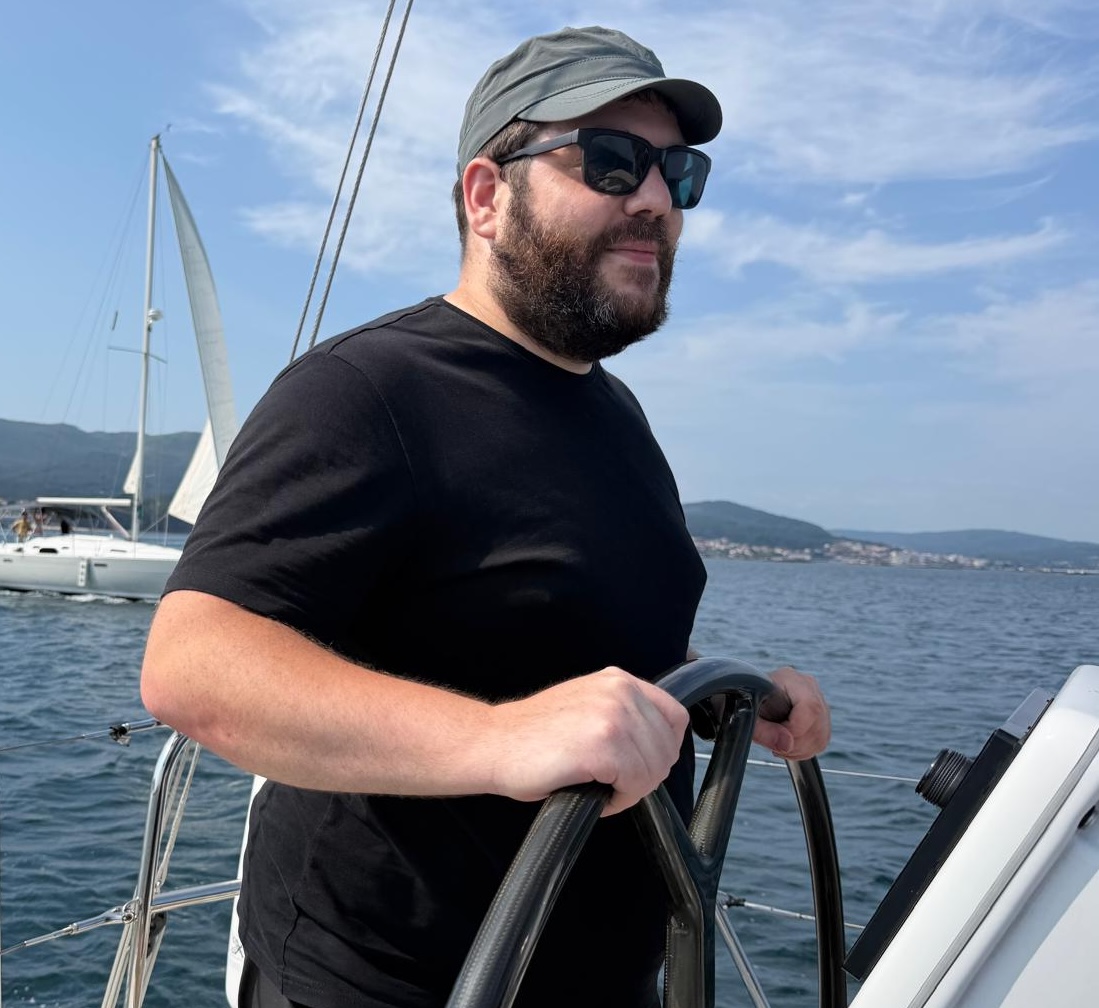
Marcos Matabuena is a Galician mathematician born in Santiago de Compostela. He has postgraduate training in mathematical statistics and holds a PhD focused on computer science and biostatistics.
His interest in quantitative research applied to health began at an early age. At fifteen, while competing in athletics, he decided to study Mathematics, convinced that the future of sports-performance optimization would increasingly depend on the development of rigorous quantitative methods.
During the final year of his undergraduate studies, he developed an indirect methodology based on functional data analysis to predict maximal oxygen uptake. He also proposed a new formulation of the Banister model, one of the main mathematical models used to describe and predict changes in physical performance resulting from training and fatigue.
During his master’s studies, he investigated new procedures for identifying the anaerobic threshold through the analysis of heart-rate variability. These early projects strengthened his interest in combining mathematics, statistics, and physiology to extract clinically and biologically meaningful information from complex signals.
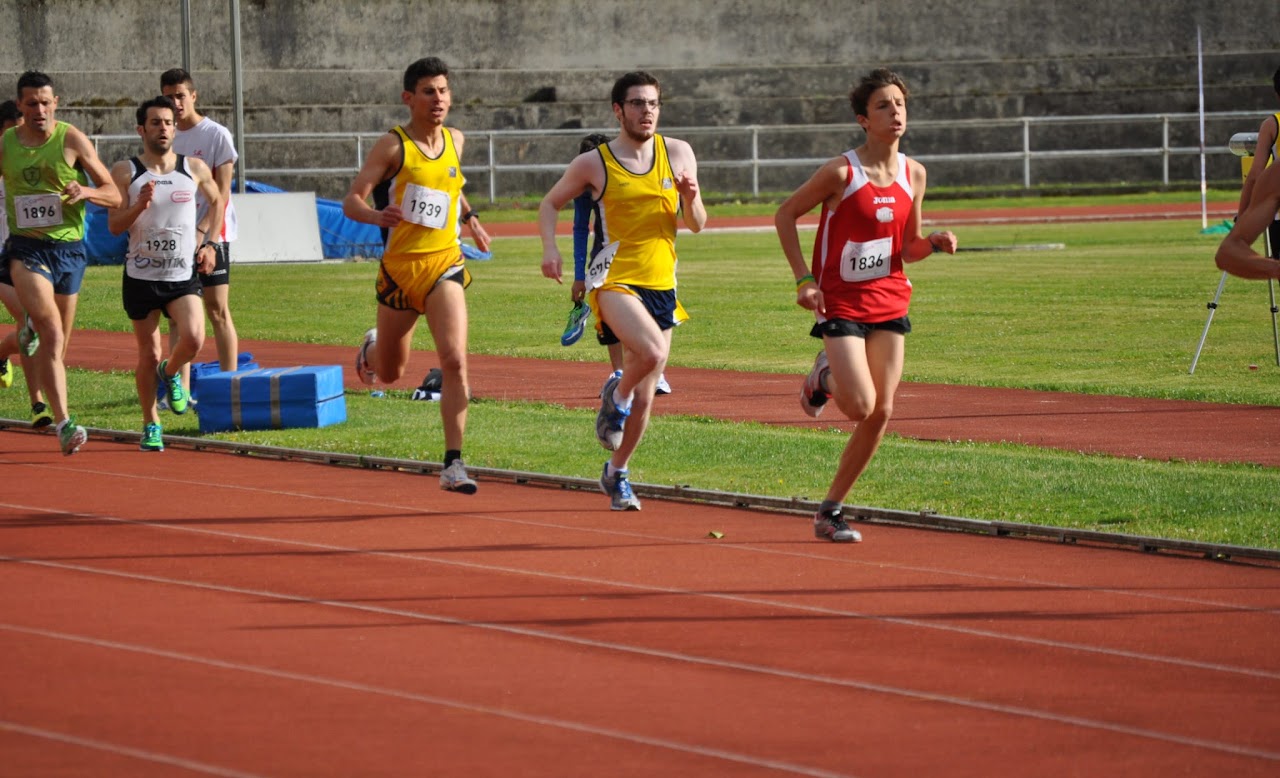
It is important to place this work in context. More than a decade ago, digital health—and what may now be described as digital biostatistics—had not yet become fully established as a research field. Driven by his own initiative, and often beyond the formal requirements of his academic training, Marcos was already exploring how data generated through sport, physiology, and monitoring devices could be studied using advanced mathematical methods. This early curiosity anticipated much of the direction that his scientific career would later take.
During his doctoral studies, which focused on digital health and the development of new statistical methods, he introduced the concept of glucodensity, a distributional representation of data generated by continuous glucose-monitoring devices. This framework offered a new way to summarize and analyze high-frequency digital signals while preserving features of the complete glucose distribution that are lost when relying exclusively on traditional clinical indicators.
In parallel, he developed a deep interest in theoretical machine learning, recognizing that transformative advances in biomedicine require increasingly sophisticated statistical and computational methods. Alongside his doctoral research, he contributed to the development of a general framework for uncertainty quantification and predictive inference when the outcomes are random objects defined in metric spaces.
He later conducted his postdoctoral research at Harvard University under the supervision of Jukka-Pekka Onnela. There, he worked on new statistical methods for digital medicine, with particular attention to neurological diseases such as ALS. In this context, he contributed to the development of functional biomarkers derived from digital data and designed to improve disease-prognosis prediction compared with conventional approaches.
As he himself acknowledges, his time in Boston was one of the most important experiences of his life. There, he met extraordinary people, both scientifically and personally, and became part of a deeply international academic ecosystem. This experience led him to reconsider what meaningful research truly involves, which problems deserve sustained attention, and how they should be approached to generate lasting scientific and social impact.
Marcos Matabuena’s scientific profile is characterized by a combination of biomedical understanding, methodological expertise, and a strong commitment to addressing real-world problems. His research begins with clinically relevant questions and seeks to address them through fundamental developments in statistics, machine learning, probability, functional data analysis, and biostatistics.
His scientific philosophy is to identify truly meaningful biomedical problems and develop, without compromising mathematical rigor, the statistical and computational methods needed to solve them and translate their results into clinical practice.
Although still at a relatively early stage of his career, he has published more than fifty scientific articles, received several international distinctions, and collaborated with leading researchers in medicine, exercise science, machine learning, probability, statistics, and biostatistics. He has also been invited to present his work at international conferences and scientific meetings.
His main contributions include the introduction of glucodensity and the development of statistical methods for its analysis; random-effects models for random objects in metric spaces; new uncertainty-quantification procedures for non-Euclidean spaces; and data-fusion and integration methods for clinical trials and digital-health studies.
A distinctive feature of his work is that his methods are not intended solely to provide mathematical innovation. They are designed to generate tangible improvements in real biomedical problems and to produce clinical knowledge that would be difficult to obtain using conventional techniques.
The ultimate goal of his research is to develop analytical approaches that contribute to the transformation of medicine, facilitate earlier disease detection, improve treatment personalization, and enhance people’s quality of life.
Marcos believes that some of the most important scientific advances will emerge at the intersection of machine learning, statistical inference, and biomedical research. This vision requires not only the development of advanced mathematical tools, but also the ability to understand clinical needs, identify meaningful problems, and formulate solutions that can be translated into medical and healthcare practice.
Students joining the group will work at the intersection of statistical inference, machine learning, and biomedical research. They will have the opportunity to develop rigorous methodology, collaborate with clinicians and international researchers, analyze distinctive digital-health datasets, and pursue ambitious ideas with genuine potential for scientific and clinical impact. The group aims to provide close supervision while simultaneously fostering intellectual independence, the formulation of original research questions, and the development of an individual scientific identity.
Outside academia, Marcos enjoys practicing sports, travelling, and attending concerts. Above all, he tries to approach life with curiosity and a sense of humor, believing that scientific ambition and professional commitment should remain compatible with a full life rich in experiences and emotions.
Beyond the aspiration for his own work to become influential, one of his greatest goals is to create an environment in which his students can find fulfilling professional paths, develop meaningful ideas, and become independent researchers capable of addressing important scientific problems.